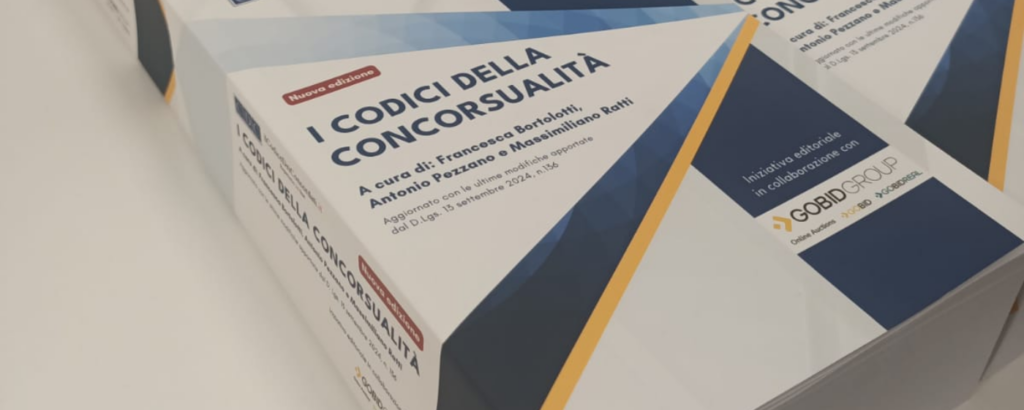
The continuous evolution of the regulatory landscape surrounding corporate crisis management demands constant updating and a strategic, comprehensive vision from industry operators. Within this context of profound transformation, Gobid Group has confirmed its role as a key partner for insolvency professionals by participating in the Scientific Conference “Insolvency law between prevention and liquidation proceedings: initial reflections on the implementation process of Directive (EU) 2026/799.” The event took place on Friday, June 12, 2026, against the picturesque backdrop of Mattinata (FG), at “La Casa e il Mare” (Agnuli area).
The event was organized under the scientific direction of Prof. Attorney Annamaria Dentamaro (Full Professor of Commercial Law at the Department of Economics, University of Foggia) and coordinated by the organizing secretariat of Attorney Prof. Sergio Cusmai. It represented a moment of the highest academic and institutional caliber, accredited by the Foggia Bar Association, the National Council of Chartered Accountants and Accounting Experts (CNDCEC), and the Foggia Association of Employment Consultants.
In a scenario characterized by reforms that reshape the boundaries between prevention and judicial liquidation, Gobid Group stepped up as the official sponsor of the event, reaffirming its dedication to providing concrete support to procedural bodies.
Focusing on European Novelties and Value Preservation
The core of the scientific debate revolved around Directive (EU) 2026/799, a fundamental piece of legislation destined to outline the guidelines for harmonizing insolvency law across Europe and directly impact domestic court practices and professional activities. The proceedings were divided into six intense and highly attended thematic sessions, featuring a rotation of authoritative judges, academics, and prominent national professionals.
The opening sessions shed light on preventive restructuring and the early detection of distress—an area where timeliness and the correct diagnosis of corporate indicators make the difference between business rescue and economic collapse. There was an in-depth discussion on strategies for preserving and safeguarding the economic and industrial value of enterprises. This priority goal resonates perfectly with Gobid Group’s operational mission: maximizing asset value through innovative, high-performance, and certified solutions.
Distinguished speakers from the academic and legal worlds took the floor, including:
- Dr. Caterina Lazzara, President of the Insolvency Proceedings Section of the Court of Foggia
- Prof. Attorney Antonio Nuzzo, Full Professor of Commercial Law at the University of Foggia
- Prof. Attorney Giovanni Capo, Full Professor of Commercial Law at the University of Salerno
- Attorney Prof. Carlo Cicala, Lecturer in Private Law at the Niccolò Cusano University of Rome
- Prof. Attorney Francesco Grieco, Extraordinary Professor of Commercial Law at LUM G. Degennaro University and Lecturer in Corporate Crisis Law at LUISS Guido Carli University of Rome
- Prof. Giovanni Fiori, Full Professor of Business Economics at LUISS Guido Carli University of Rome
- Prof. Attorney Stefano Ambrosini, Full Professor of Commercial Law at the University of Eastern Piedmont
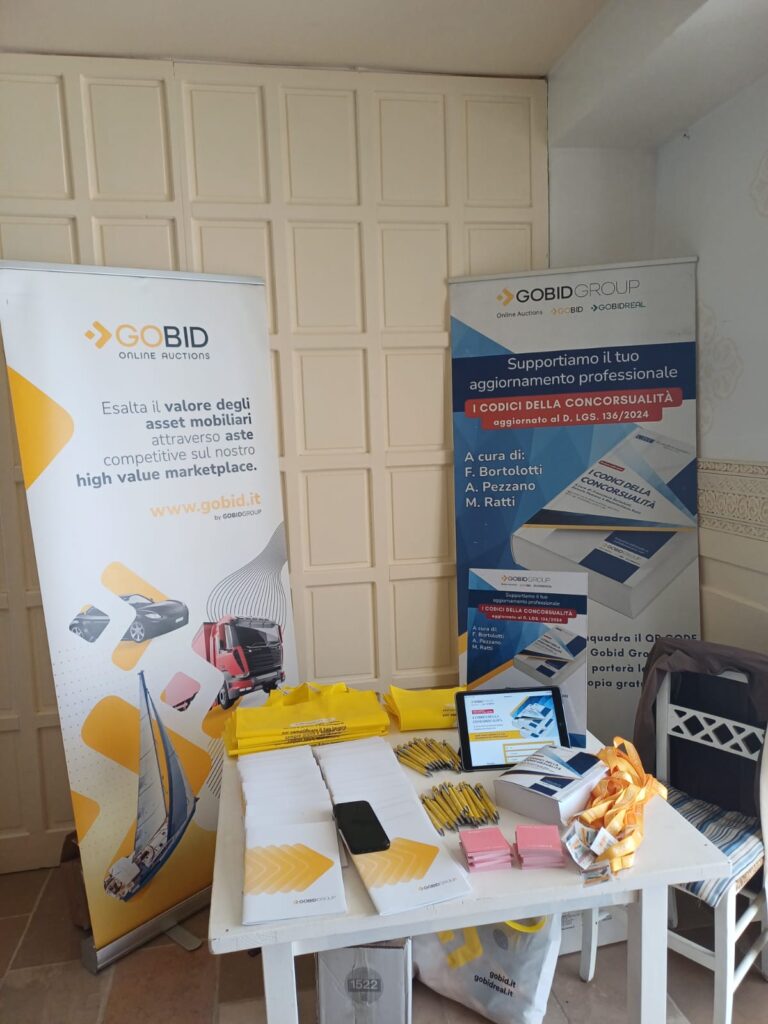
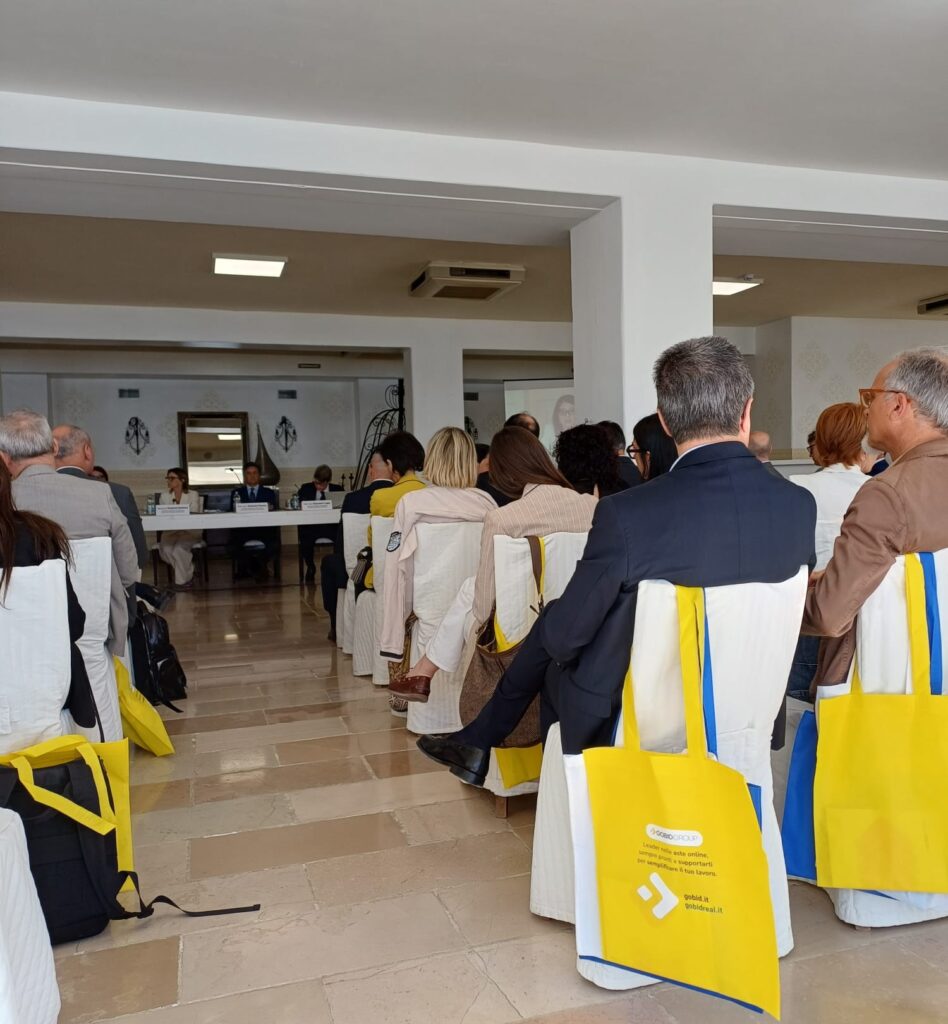
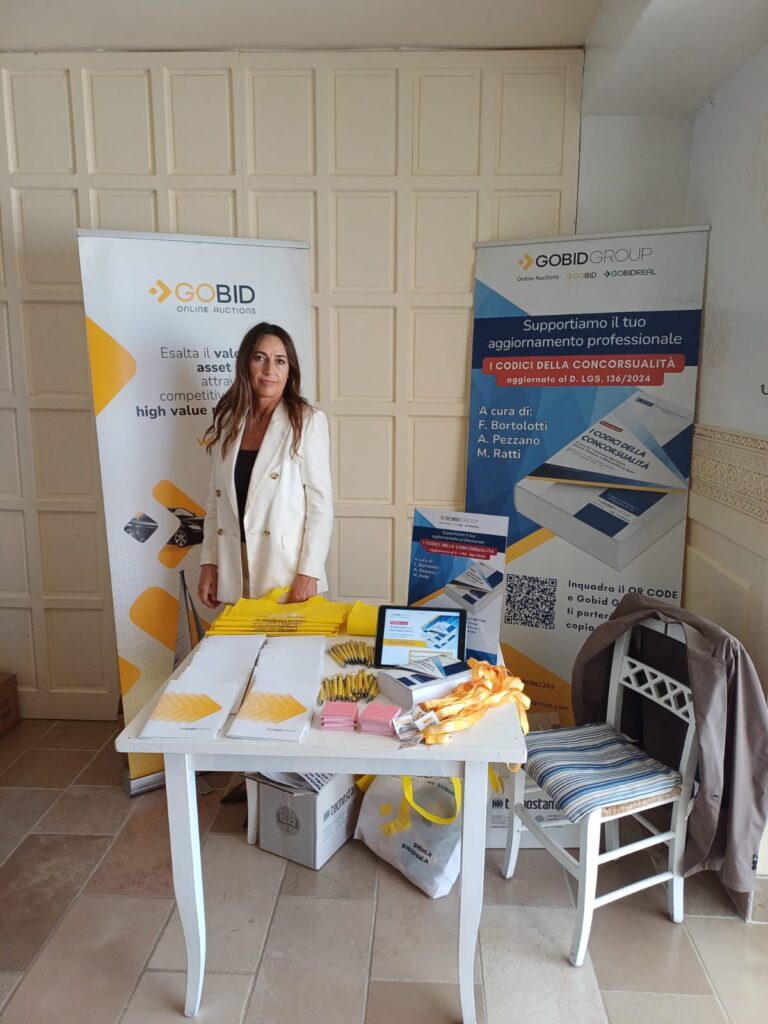
Highlights from the Conference
Obligations of Control Bodies and Creditor Protection
The afternoon sessions were central for professionals, focusing specifically on the obligations of directors and statutory auditors regarding early warning mechanisms and the complex governance of protected interests. The panel then shifted to the delicate verification of the “best interest of creditors” test—a cornerstone principle guiding the efficiency of any modern insolvency framework.
Authoritative figures intervened, including:
- Dr. Andrea Petteruti, Director General of Material Resources and Technologies at the DOG of the Ministry of Justice
- Prof. Francesco Perrini, Full Professor of Business Economics and Management at Bocconi University in Milan
- Dr. Patrizia Pompei, President of the Court of Prato
- Prof. Attorney Niccolò Abriani, Full Professor of Commercial Law at the University of Florence
- Prof. Attorney Edgardo Ricciardiello, Associate Professor of Commercial Law at the University of Bologna
- Dr. Enrico Legnini, Judge of the Insolvency Proceedings Section of the Court of Foggia
- Prof. Attorney Elena Fregonara, Associate Professor of Commercial Law at the University of Eastern Piedmont
- Dr. Rinaldo D’Alonzo, Delegated Judge of the Insolvency Proceedings Section of the Court of Larino
- Attorney Prof. Alessandro Riccioni, Adjunct Professor of Private Law at the Niccolò Cusano University of Rome
The concluding panel discussion involved prominent figures from the judiciary and academia, featuring notable contributions from the Justices of the Supreme Court of Cassation, Dr. Valentino Lenoci and Dr. Alessandro Farolfi. This debate focused on the boundaries, intersections, and systemic perspectives between preventive restructuring law and liquidating insolvency.
Anticipating Change:
Gobid Group’s Response to New European Standards
Gobid Group’s Response to New European Standards
In the scenario outlined by the reform, operational efficiency and transparency become the fundamental pillars by which to measure the success of any safeguard action or judicial liquidation. In this context, Gobid Group positions itself as a strategic operational ally in procedure management. Active participation in top-tier meetings, such as the one in Mattinata, aligns with a precise corporate vision: translating academic guidelines and jurisprudence trends into concrete tools capable of simplifying the daily work of professionals and Courts.
Whether in the dynamics of negotiated settlement (composizione negoziata) or traditional liquidation procedures, the speed of asset appraisal and the ability to reach a global audience of potential buyers make all the difference. By maintaining a presence where the future of European insolvency law is being written, Gobid Group successfully anticipates answers to new compliance requirements, translating high-level theoretical debate into a real competitive advantage for procedural bodies. All this is achieved while ensuring flexibility, high performance, and total adherence to the efficiency standards demanded by the European Union.
Want to stay updated on the topics that matter most to you?
Help us send you communications tailored to your specific needs. Share your preferences with us!